
NexTech 1.0: 24 Hours of Defence Innovation at NMIET Bhubaneswar
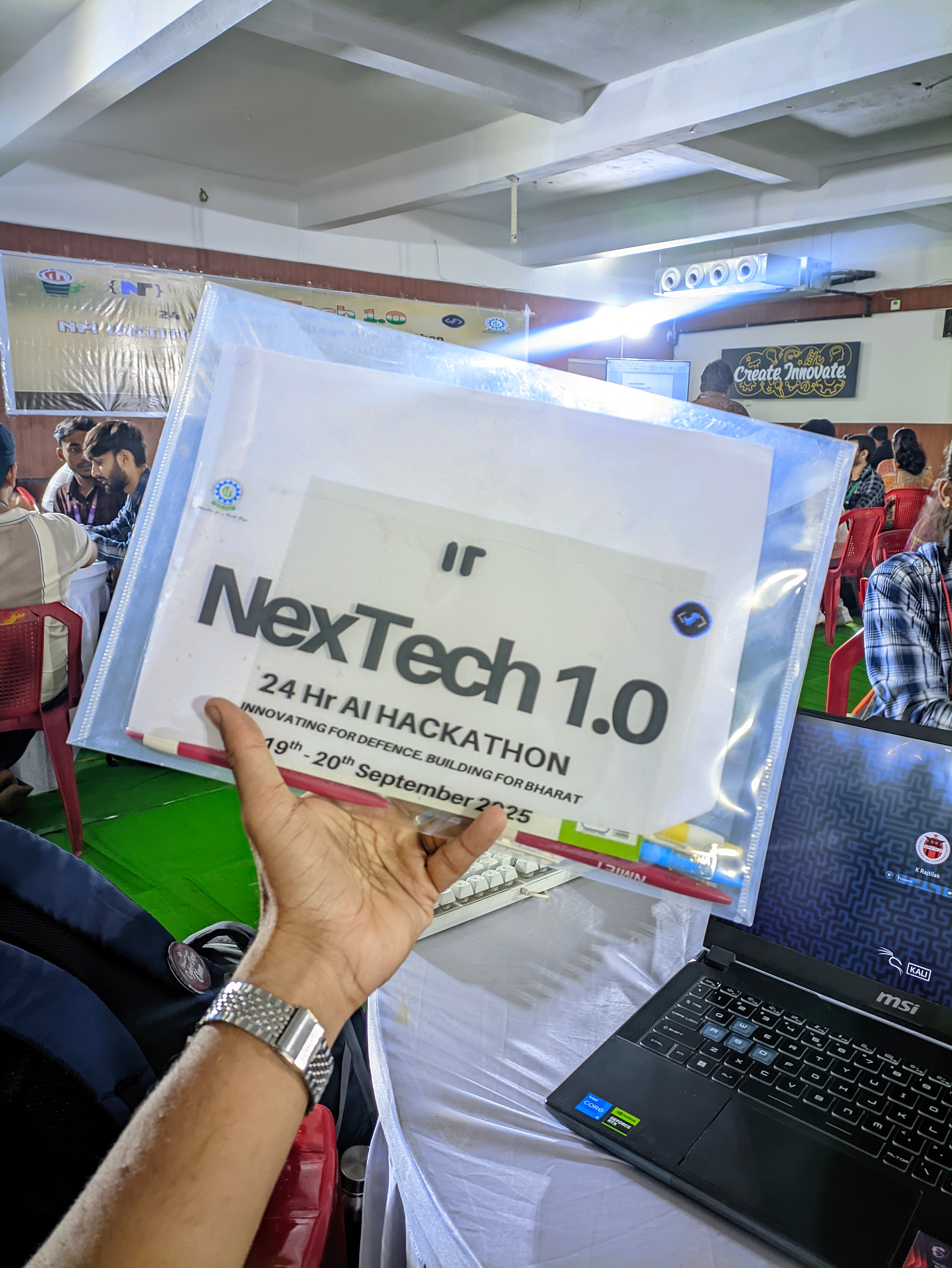
Staring at the clock showing 4 AM, surrounded by empty energy drink cans and the gentle hum of overworked laptops, I never imagined that sleep deprivation could feel so exhilarating. The NexTech 1.0 hackathon at NMIET Bhubaneswar had promised us 24 hours of "Innovating for Defence, Building for Bharat," and as we entered the final stretch of coding our Suraksha defence monitoring system, those words had taken on a meaning far deeper than any of us expected.
What began as an exciting opportunity to tackle real-world defence challenges alongside my classmates evolved into one of those transformative experiences that redefines your understanding of innovation, collaboration, and the responsibility that comes with building technology for national security.
Sometimes the most profound learning happens when you're pushed beyond your comfort zone, fueled by nothing but determination and the shared vision of creating something meaningful for our country.
#The Squad That Answered the Call
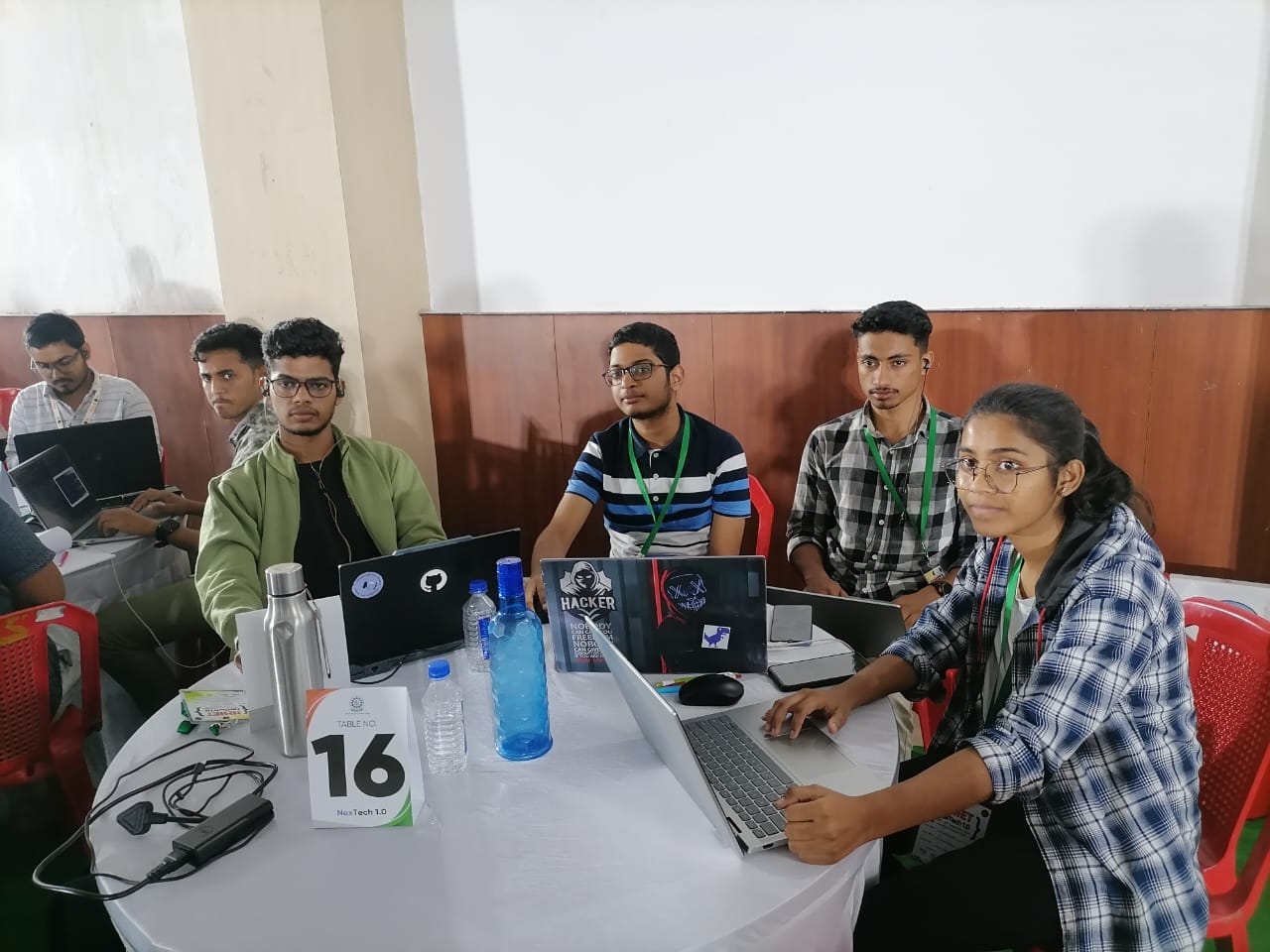
Innovation thrives on diverse perspectives, and our team brought together complementary skills that would prove crucial during the intense 24-hour sprint. Satya Sarthak Manohari, Suryakanta Sahoo, Supriya Kumari, and myself—a tight-knit crew passionate about leveraging technology for meaningful impact—found ourselves united by a mission that transcended typical hackathon objectives: building technology that could protect our nation.
This wasn't just another coding competition; it was a call to contribute to something larger than ourselves. The theme "Defence & Safety" carried weight that went beyond typical hackathon challenges, demanding not just technical excellence but also deep consideration of real-world implications.
Satya Sarthak Manohari brought his systematic approach to problem-solving, essential for architecting a comprehensive defence monitoring solution that could handle complex, multi-layered security challenges. Suryakanta Sahoo applied his analytical mindset and technical expertise to tackle the intricate aspects of threat detection algorithms and response mechanisms. Supriya Kumari contributed her keen attention to detail and user-centric thinking, ensuring our solution would be practical and usable in high-pressure defence scenarios. Together with my focus on system integration and project coordination, we formed a balanced team capable of tackling the multifaceted challenge ahead.
Together, we formed a team capable of tackling the multifaceted challenge of defence technology innovation.
#The Challenge: More Than Just Code
The NexTech 1.0 problem statement was deceptively simple yet profoundly complex: "Build an intelligent defence system for monitoring and threat response for the Indian Armed Forces."
Behind those words lay layers of technical, ethical, and practical considerations that would push us to think beyond traditional software development approaches.
#Understanding the Real Stakes
This wasn't about building another app or optimizing existing systems. We were tasked with creating technology that could potentially save lives, protect national interests, and contribute to India's defence capabilities. The weight of that responsibility shaped every decision we made throughout the hackathon.
Key Challenge Areas:
- Real-time threat detection across multiple data sources
- Intelligent response systems that could adapt to emerging threats
- Secure communication channels resistant to compromise
- Scalable architecture suitable for national-level deployment
- User interfaces designed for high-pressure decision-making environments
#The Innovation Imperative
The hackathon emphasized innovation specifically for defence applications, requiring us to think about:
- How emerging technologies could enhance national security
- Integration with existing defence infrastructure
- Balancing automation with human oversight
- Ensuring reliability under extreme conditions
- Maintaining security while enabling collaboration
#The Birth of Suraksha: Our Defence Innovation
After intensive brainstorming and problem analysis, we conceptualized Suraksha—an intelligent defence monitoring and threat response system designed to enhance the capabilities of the Indian Armed Forces.
#Vision and Mission
Suraksha (meaning "protection" in Sanskrit) emerged from our understanding that modern defence challenges require integrated, intelligent solutions that combine:
- Advanced threat detection algorithms
- Real-time data processing capabilities
- Secure communication protocols
- Intuitive command and control interfaces
- Adaptive response mechanisms
#Core Innovation Areas
Intelligent Threat Detection Our system leverages machine learning algorithms to identify potential threats across multiple domains—cyber, physical, and information warfare. Unlike traditional rule-based systems, Suraksha learns from patterns and adapts to emerging threat vectors.
Adaptive User Interfaces Different defence personnel have different information needs. Suraksha provides role-based dashboards that present relevant information in formats optimized for quick decision-making under pressure.
Scalable Infrastructure Design From border outposts to command headquarters, our system architecture scales to meet diverse deployment requirements while maintaining consistent functionality.
#Technical Deep Dive: Building Under Pressure
The 24-hour timeline demanded strategic technical decisions that balanced ambition with achievability. Our GitHub repository Suraksha-Mirage_NexTech1.0 documents our technical journey.
#Architecture Decisions
Technology Stack Selection Time constraints required choosing technologies our team knew well while ensuring they could handle defence-grade requirements:
- Backend: Node.js with Express for rapid API development
- Database: MongoDB for flexible data modeling
- Frontend: React for responsive user interfaces
- Security: JWT authentication with additional encryption layers
- Real-time Communication: WebSocket integration for live updates
Modular Design Philosophy Understanding that defence systems must be maintainable and extensible, we designed Suraksha with clear separation of concerns:
- Threat detection modules that could be independently updated
- Communication layers that could integrate with existing defence protocols
- User interface components designed for different operational roles
- Security modules that could be enhanced without affecting core functionality
#Implementation Challenges
Real-time Data Processing Defence scenarios demand immediate response to threats. We implemented efficient data processing pipelines that could handle high-volume, real-time information while maintaining accuracy.
Security-First Development Every component was designed with security as a primary concern, not an afterthought. This included:
- End-to-end encryption for all communications
- Secure authentication and authorization protocols
- Protection against common vulnerabilities
- Audit trails for all system activities
User Experience Under Stress Defence personnel operate under high-stress conditions. Our interface design prioritized:
- Clear, immediate access to critical information
- Minimal cognitive load for common operations
- Visual indicators that work in various lighting conditions
- Responsive design for different device types
#Innovation Integration
Machine Learning Components We integrated ML algorithms for pattern recognition and anomaly detection, enabling Suraksha to identify potential threats that might not match pre-defined rules.
API-First Design Understanding that defence systems must integrate with existing infrastructure, we built Suraksha with comprehensive APIs that could connect with other defence technologies.
Offline Capability Defence operations can't depend on constant connectivity. Our system includes offline modes that maintain core functionality even when network connections are compromised.
#The 24-Hour Sprint: Lessons in Intense Collaboration
The hackathon timeline created a unique learning environment that compressed months of typical development experience into a single day and night.
#Hour-by-Hour Evolution
Hours 1-6: Foundation and Planning Initial hours focused on understanding requirements, architectural planning, and task distribution. The team's diverse skills became immediately apparent as we naturally gravitated toward our strengths while maintaining constant communication.
Hours 7-12: Core Development Mid-day brought intense coding as core system components took shape. The collaborative development process—with frequent integration and testing—ensured we remained aligned despite working on different modules simultaneously.
Hours 13-18: Integration and Refinement Afternoon hours were spent connecting system components, identifying integration issues, and refining functionality. This phase tested both our technical skills and communication effectiveness.
Hours 19-24: Polish and Presentation The final stretch combined bug fixing, feature polishing, and presentation preparation. Sleep deprivation was offset by excitement as Suraksha evolved from concept to functional prototype.
#Collaborative Learning Moments
Problem-Solving Under Pressure The time constraint forced efficient problem-solving approaches. When individual solutions weren't working, we quickly pivoted to collaborative debugging and solution development.
Knowledge Sharing in Real-Time Team members taught each other new technologies and approaches on the fly. Supriya's attention to user interface design, Satya's security implementations, and Suryakanta's system optimization techniques were shared and absorbed immediately.
Decision-Making Efficiency Limited time eliminated lengthy debate cycles. We learned to make informed decisions quickly, implement them, and adjust based on results rather than endless planning.
#Technical Breakthroughs
Integrated Security Framework Around hour 15, we achieved a breakthrough in our security architecture that elegantly balanced usability with defence-grade protection requirements.
Real-time Communication Protocol Hour 20 brought success in implementing our real-time communication system, enabling instant coordination across different system components.
Adaptive User Interface In the final hours, we completed our role-based interface system that automatically adapts to different user types and operational contexts.
#Beyond Code: Understanding Defence Technology Responsibility
Working on defence technology brought ethical and practical considerations that typical hackathon projects don't encounter.
#Responsibility and Ethics
National Security Implications Every line of code we wrote carried potential implications for national security. This responsibility influenced our approach to testing, security, and documentation.
User Safety Considerations Defence personnel depend on reliable technology in life-or-death situations. We couldn't treat this as just another coding exercise—reliability and accuracy were paramount.
Privacy and Surveillance Balance Our system needed to enhance security without compromising privacy rights or creating potential for misuse.
#Real-World Application Thinking
Integration with Existing Systems Defence organizations have established procedures and technologies. Our solution needed to enhance rather than disrupt existing operational frameworks.
Training and Adoption Even the best technology fails if users can't effectively utilize it. We considered training requirements and adoption challenges throughout development.
Maintenance and Evolution Defence systems require long-term support and continuous evolution. Our architecture decisions reflected these ongoing requirements.
#Networking and Community: Beyond Competition
While focused on building Suraksha, the hackathon environment provided valuable networking and learning opportunities.
#Peer Learning and Collaboration
Cross-Team Knowledge Exchange Interactions with other teams revealed different approaches to similar challenges, broadening our understanding of possible solutions.
Mentor Insights Industry mentors present during the hackathon provided guidance on both technical implementation and real-world deployment considerations.
Collaborative Problem-Solving The hackathon fostered a collaborative rather than purely competitive atmosphere, with teams sharing general insights while working on their individual solutions.
#Industry Connections
Defence Technology Landscape Conversations with mentors and organizers provided insights into India's defence technology ecosystem and career opportunities in this sector.
Startup and Innovation Perspectives Learning about how defence innovations transition from prototypes to deployed solutions expanded our understanding of the innovation pipeline.
Government and Policy Insights Understanding the policy framework that governs defence technology development gave us context for our technical work.
#Technical Learnings: Skills Developed Under Fire
The intense hackathon environment accelerated our learning in ways that traditional coursework or personal projects couldn't match.
#Development Methodology Insights
Agile Under Extreme Time Constraints We learned to apply agile development principles in compressed timeframes, maintaining quality while maximizing feature delivery.
Collaborative Coding Techniques Pair programming, code reviews, and integration practices became essential survival skills rather than theoretical best practices.
Rapid Prototyping and Iteration The hackathon taught us to build functional prototypes quickly, test core assumptions, and iterate based on immediate feedback.
#Technical Skill Enhancement
Security-First Development Working on defence applications deepened our understanding of secure coding practices, threat modeling, and security architecture.
System Integration Approaches Building Suraksha required integrating multiple technologies and ensuring seamless communication between components.
Performance Optimization Real-time defence applications demand optimal performance. We learned optimization techniques for both frontend and backend components.
#Problem-Solving Evolution
Constraint-Driven Innovation Limited time and resources forced creative solutions and helped us identify the essential features versus nice-to-have additions.
Collaborative Debugging Complex integration issues required team-based debugging approaches that were more effective than individual troubleshooting.
Documentation Under Pressure We learned to create essential documentation quickly while maintaining code quality and system understanding.
#Project Impact: From Prototype to Possibility
While Suraksha remains a hackathon prototype, its development provided insights into defence technology challenges and potential solutions.
#Technical Achievements
Functional Prototype Development In 24 hours, we created a working demonstration of intelligent defence monitoring capabilities with real-time threat detection and response coordination.
Scalable Architecture Design Our system architecture could theoretically scale from small unit deployment to national-level implementation.
Integration-Ready Design Suraksha was built with APIs and interfaces that could connect with existing defence technologies and protocols.
#Learning and Development Impact
Team Capability Enhancement The hackathon significantly improved our collaborative development skills and ability to work under pressure.
Domain Knowledge Expansion We gained understanding of defence technology requirements, challenges, and opportunities that will influence future projects.
Innovation Methodology The experience taught us approaches to rapid innovation that apply beyond defence applications.
#Future Development Potential
Enhanced ML Integration Additional development could incorporate more sophisticated machine learning algorithms for improved threat detection and prediction.
Extended Communication Protocols Further work could integrate with military communication standards and encrypted messaging systems.
Mobile and Field Deployment Enhanced mobile interfaces and offline capabilities could support field deployment scenarios.
#Broader Implications: Technology for National Service
The NexTech 1.0 hackathon highlighted important themes about technology's role in national development and security.
#Innovation for National Interest
Student Contribution to Defence The hackathon demonstrated how student innovators can contribute to national security challenges through technology development.
Academic-Military Collaboration Events like NexTech 1.0 create bridges between academic innovation and defence requirements, fostering collaboration and knowledge exchange.
Local Innovation for Global Security Our work showed how local technical talent can address global security challenges with solutions designed for Indian defence needs.
#Technology Ethics and Responsibility
Dual-Use Technology Considerations Defence technologies often have civilian applications, raising questions about development priorities and usage guidelines.
Privacy and Surveillance Balance Building monitoring systems requires careful consideration of privacy rights and potential for misuse.
Innovation Accountability Developing technology with national security implications carries responsibility for considering long-term consequences and ethical implications.
#Economic and Career Implications
Defence Technology Sector Growth The hackathon highlighted opportunities in India's growing defence technology sector and potential career paths for technical graduates.
Innovation Ecosystem Development Events like NexTech 1.0 contribute to developing local innovation ecosystems focused on nationally important challenges.
Startup and Entrepreneurship Potential The hackathon experience provided insights into how defence technology innovations could form the basis for startup ventures.
#Looking Forward: Applications and Next Steps
The NexTech 1.0 experience continues to influence our approach to innovation and technology development.
#Immediate Applications
Project Development Methodology The rapid development techniques we learned are being applied to other projects, including our ongoing SRAAS agricultural technology work.
Security-First Approach The security considerations from defence development are enhancing the reliability and security of all our technology projects.
Collaborative Development Skills The intense collaboration experience improved our ability to work effectively in high-pressure team environments.
#Medium-term Goals
Defence Technology Exploration We're planning to continue exploring defence technology applications, potentially through internships or research opportunities.
Hackathon Participation Strategy The positive experience is motivating participation in additional hackathons, each focusing on different societal challenges.
Skill Development Focus The hackathon highlighted specific technical areas where we want to deepen our expertise, particularly in security and system integration.
#Long-term Vision
Innovation for Social Impact The experience reinforced our commitment to using technical skills for solutions that benefit society and national development.
Career Path Consideration Working on defence technology opened our eyes to career opportunities in government technology, defence contractors, and security-focused startups.
Contribution to Innovation Ecosystem We want to contribute to India's growing innovation ecosystem, particularly in areas that address national priorities and challenges.
#Gratitude and Recognition
The NexTech 1.0 hackathon was made possible through the dedication and vision of organizers who understand the importance of fostering innovation in critical national areas.
#Event Organizers and Sponsors
The NMIET EDCell team created an environment that challenged participants while providing necessary support and resources. Their commitment to fostering defence innovation among students is commendable and important for national technology development.
#Venue and Infrastructure
NMIET Campus provided an excellent environment for intensive development work, with reliable infrastructure that enabled 24-hour coding sessions and collaborative work.
#Mentors and Industry Partners
The mentors and industry representatives who participated provided crucial guidance on both technical implementation and real-world application considerations.
#Our Team Dynamic
Satya Sarthak Manohari, Suryakanta Sahoo, and Supriya Kumari—our shared commitment to building something meaningful created a team dynamic that made 24 hours of intense work feel like an exciting collaborative adventure rather than a grueling competition.
#Final Reflections: Beyond the Prototype
As I reflect on our NexTech 1.0 experience and the development of Suraksha, what strikes me most isn't just the technical achievement—though building a functional defence monitoring system in 24 hours was significant—but the broader understanding we gained about innovation, responsibility, and service.
#Technology as Service to Nation  Under Pressure
The hackathon helped us understand technology development not just as a career path or academic exercise, but as a form of service to our country. When you're building systems that could potentially protect lives and national interests, every design decision carries weight beyond typical software considerations.
#Innovation Under Pressure
The 24-hour constraint created a unique learning environment that compressed months of development experience into a single intensive session. We learned that innovation often emerges not despite constraints but because of them.
#Collaboration Amplifies Individual Capability
Each team member brought unique strengths, but our collective achievement far exceeded what any of us could have accomplished individually. The hackathon reinforced that the most important innovations emerge through collaborative effort.
#Prototype as Proof of Concept
While Suraksha remains a prototype, its development proved that student innovators can tackle complex, nationally important challenges given the right opportunity and support.
#Learning Through Building
The most valuable learning happened through the process of building rather than just studying. The hackathon provided hands-on experience with defence technology challenges that no classroom or textbook could replicate.
#A Message to Fellow Student Innovators
If you're a student considering participating in hackathons like NexTech 1.0, let our experience encourage you to embrace these opportunities:
#Embrace Challenging Themes
Don't shy away from hackathons addressing serious societal challenges like defence, healthcare, or environmental issues. These themes provide context that elevates technical work beyond mere coding exercises.
#Value Team Diversity
Seek teammates with complementary skills and perspectives. Our team's diversity in approach and expertise was crucial to tackling the multifaceted defence challenge.
#Think Beyond the Event
Use hackathons as learning opportunities that extend beyond the event itself. The skills, connections, and insights gained continue to provide value long after the final presentation.
#Consider Real-World Impact
Approach hackathons with genuine interest in solving real problems rather than just winning prizes. This mindset leads to more meaningful solutions and learning experiences.
#Balance Innovation with Responsibility
Especially when working on sensitive applications like defence technology, consider the ethical and social implications of what you're building.
#Looking Ahead: The Future We're Building Together
The NexTech 1.0 hackathon and our development of Suraksha represent more than just a 24-hour coding exercise—they represent student participation in building technology for India's future security and development.
#Our Continued Commitment
As we continue our studies and projects, we carry forward the insights and responsibilities learned through this experience. The defence technology challenges we encountered will influence our approach to future innovations.
#Community Contribution
We're committed to sharing our learnings with other students and contributing to the growing ecosystem of innovation-focused events and communities in Bhubaneswar and beyond.
#Innovation Pipeline
The hackathon demonstrated how events like NexTech 1.0 create pathways for student innovation to contribute to national priorities. We want to support and participate in this innovation pipeline.
Here's to the NMIET EDCell and all organizers who create opportunities for students to contribute to national development through technology innovation. Here's to hackathons that challenge us to think beyond ourselves and build solutions for the greater good. And here's to the continued growth of India's defence technology capabilities through the energy and innovation of its young technologists. 🇮🇳
Interested in connecting with our team or learning more about our defence technology work and other projects? We're always excited to discuss innovation, hackathon experiences, and the intersection of technology with national development. The conversations and collaborations that started at NexTech 1.0 continue, and we welcome others who share our passion for building technology that serves our nation.
Tags: #NexTech1.0 #DefenceTech #Hackathon #Innovation #NMIET #Bhubaneswar #StudentInnovation #TechForIndia #DefenceSecurity #CollaborativeInnovation
Share this article
If you found this helpful or intresting, consider sharing it with others!